
Saint Wandrille
Place Daniel Boucour
76890 Anglesqueville-sur-Saâne (Val-de-Saâne)
Other, Church | XIIe - XIIIe siècle -1753 | Renaissance, Classical | Catholic Church


Map
Opening hours
01 January - 31 December
Mon 8.00 - 19.00
Tue 8.00 - 19.00
Wed 8.00 - 19.00
Thu 8.00 - 19.00
Fri 8.00 - 19.00
Sat 8.00 - 19.00
Sun 8.00 - 19.00
Description
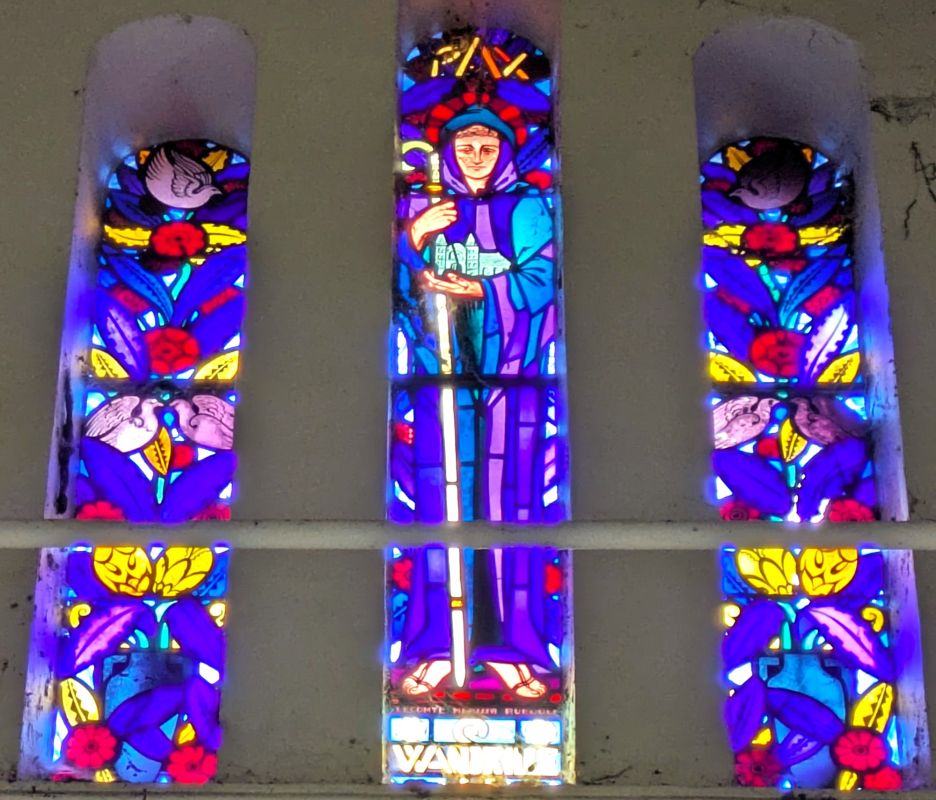
The church is dedicated to Saint Wandrille, a 7th-century monk associated with the religious history of Normandy. Ordained as a priest by Saint Ouen in Rouen, he founded Fontenelle Abbey in 649 – now known as Saint-Wandrille Abbey – in Seine-Maritime. He died in 668 and remains a major spiritual figure in the region.
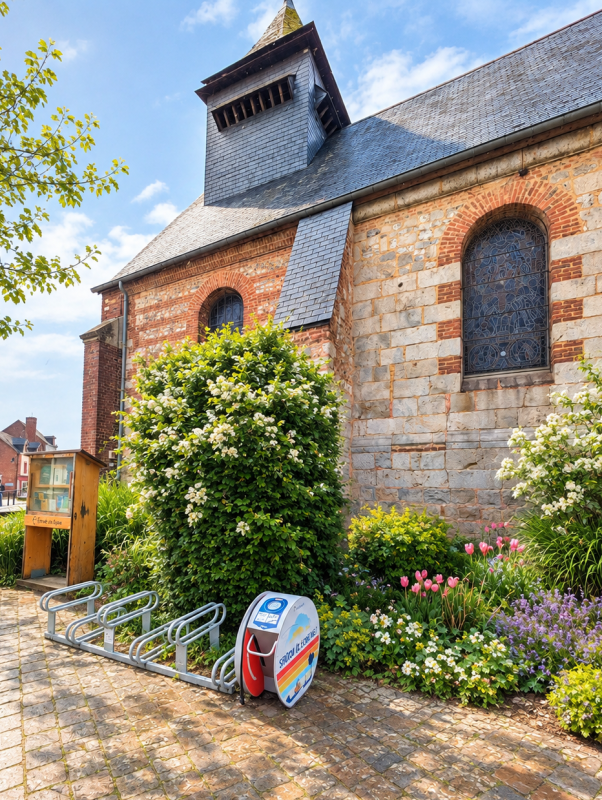
Rebuilt in 1752, as indicated by a date engraved on the chevet, the building features walls combining calcareous tuff, sandstone, brick and flint, bearing witness to its successive alterations. Its red-brick and flint porch and its unobtrusive bell tower are characteristic features of this rural Norman church. The porch and sacristy were added between the late 19th and early 20th centuries.
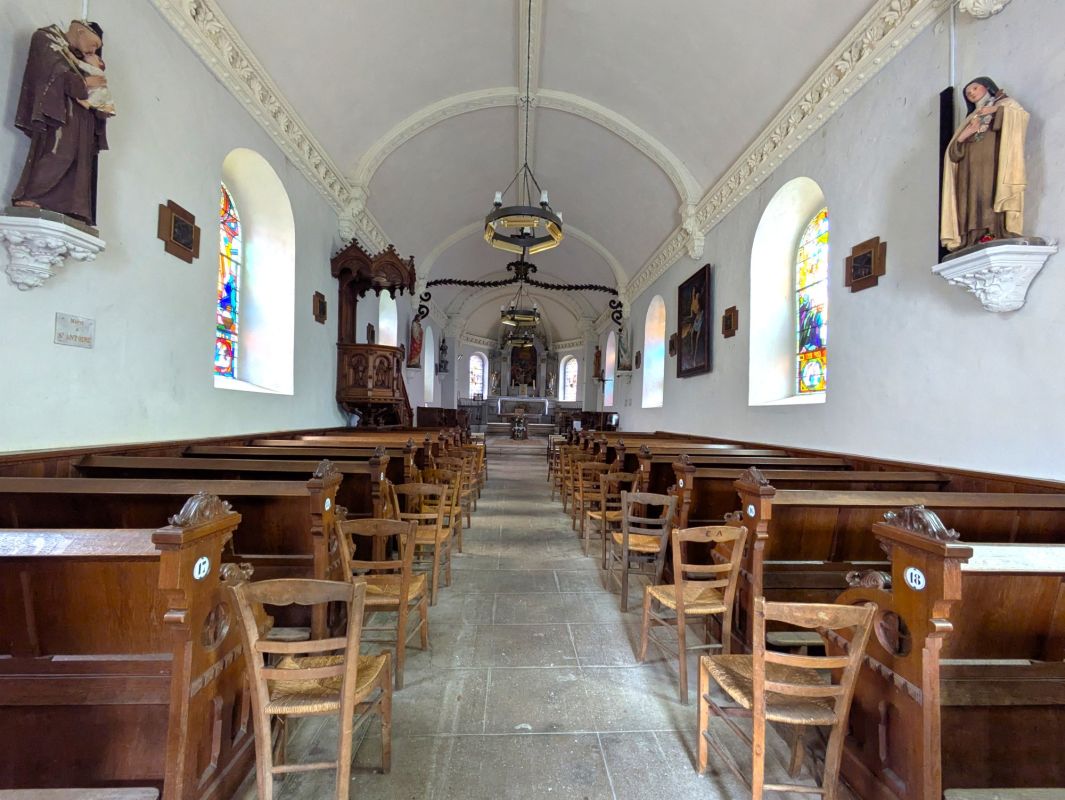
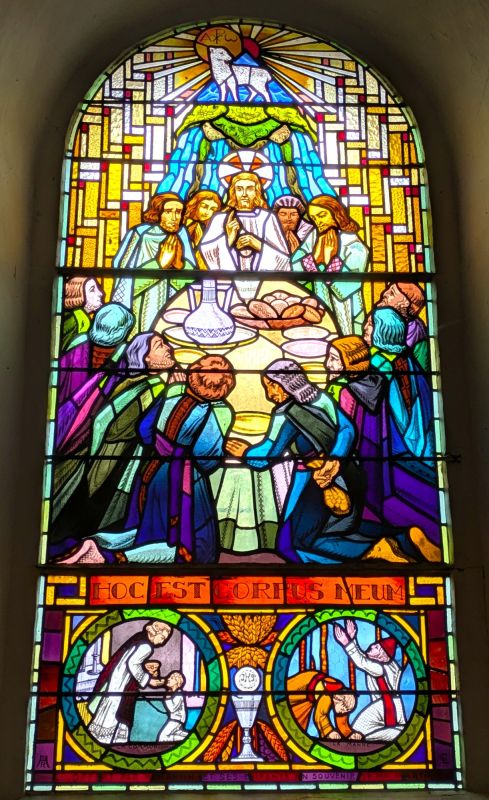
Inside, the large windows flood the nave with light and showcase the stained-glass windows, which depict, in particular, the life of Christ. Those in the nave are thought to have been funded by a public appeal during the interwar period, whilst those in the chancel appear to be older.
The architecture, stained-glass windows and furnishings invite visitors to discover the treasures of this building and the traces of its history over the centuries.
Translated with DeepL.com (free version)

Photos
Remarkable elements
Saint Wilgeforte
This 16th-century stained wooden statue depicts a young woman with long hair and a thick beard. According to legend, this Christian virgin is said to have obtained God’s permission for her beard to grow so that she might escape a forced marriage. Crucified by her father, she became a figure of deliverance. Rare in France (fewer than 10 examples), this unique depiction is thought to have arisen from a confusion between an imaginary saint and a crucified Christ clad in a long tunic.
Saint Adrian
This stained wooden statue from the early 17th century depicts Saint Adrian as a Roman soldier, recalling his life and conversion. In the 4th century, during the reign of Emperor Diocletian, he was tasked with enforcing the persecutions against Christians. Moved by the courage of the martyrs, he converted to Christianity and in turn suffered persecution himself. Patron saint of butchers, soldiers and arms dealers, he was also invoked during outbreaks of the plague.
Saint Sebastian
This 18th-century painting depicts the martyrdom of Saint Sebastian. A Christian Roman soldier, he was condemned by Emperor Diocletian to be riddled with arrows. Against all odds, he survived before being executed by flogging. The painting highlights his youthful physique and the chiaroscuro effect characteristic of Baroque painting.
Glory beam
Also known as a ‘perque’ in Norman, this wooden beam separates the nave, where the congregation gathers, from the chancel, where religious services are held. It bears a figure of Christ on the cross and a Latin inscription which means: ‘Hail, O Cross, our only hope’. Dating back to before the introduction of rood screens, these beams serve as a reminder of the importance of the cross in the Christian faith. Now a rare sight, they bear witness to the ancient traditions of the churches.
High Altar
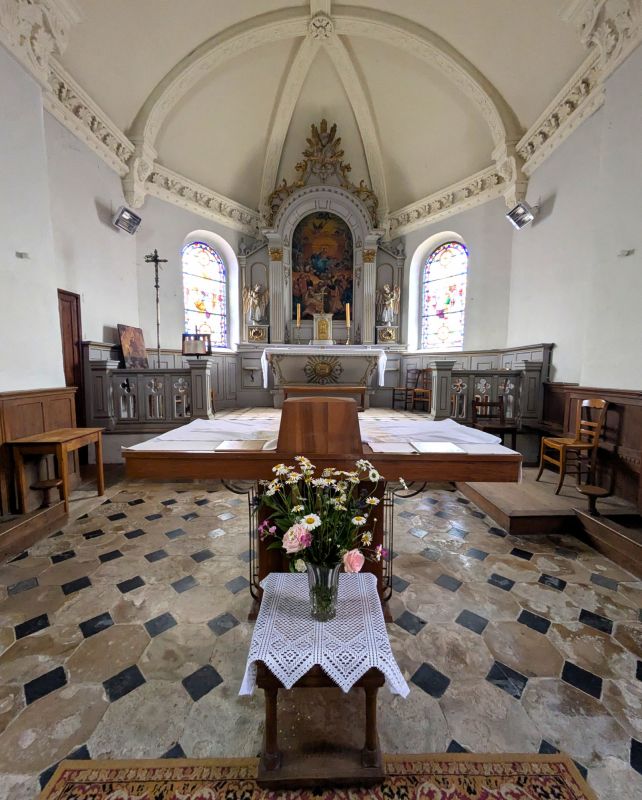
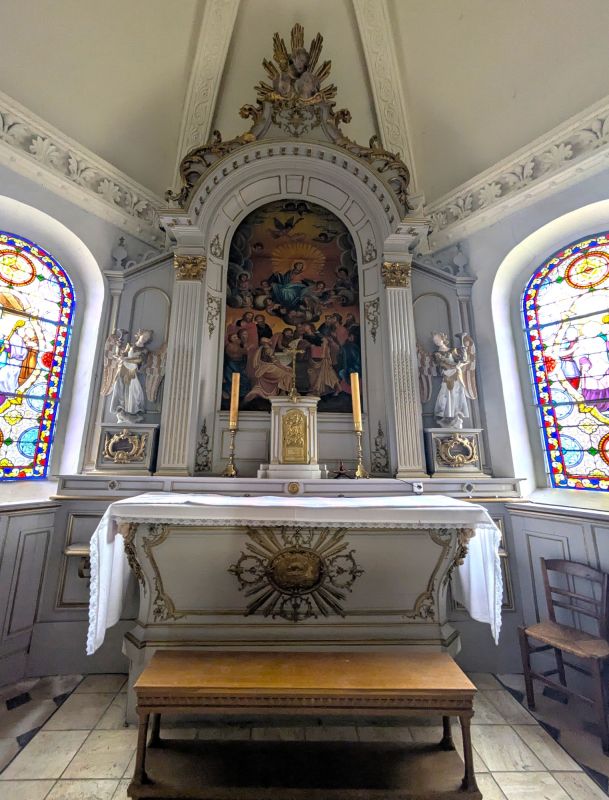
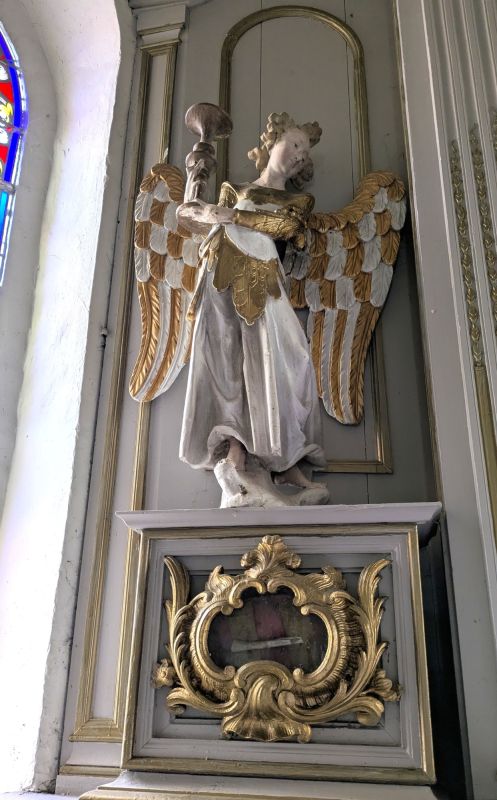
This 18th-century ensemble, crafted from wood painted white and gilded, showcases the altarpiece, at the centre of which hangs a painting depicting the Assumption of the Virgin. This composition draws direct inspiration from Titian’s work, in which the apostles, overcome with emotion, witness Mary’s ascension to heaven, accompanied by angels. The composition is flanked by two candle-bearing angels carrying candlesticks surmounting unidentified reliquaries.
Wooden furnishings
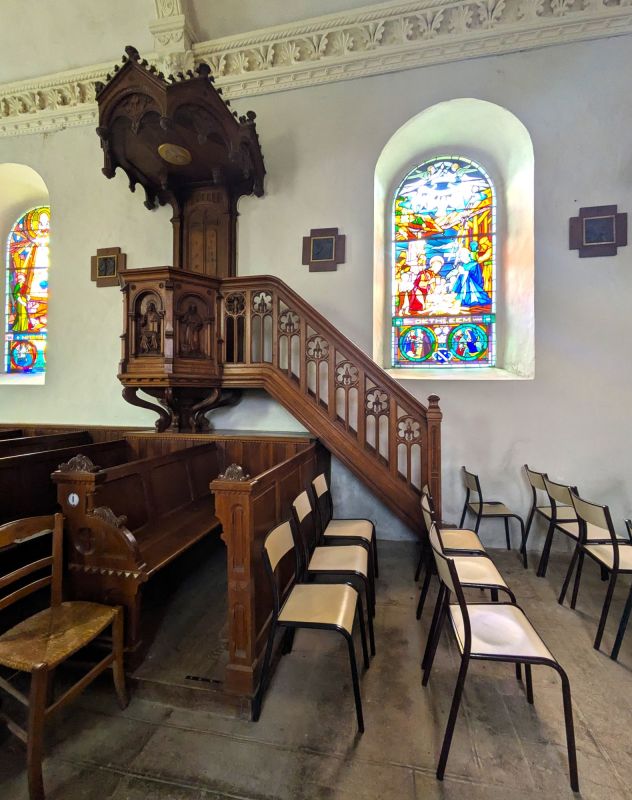
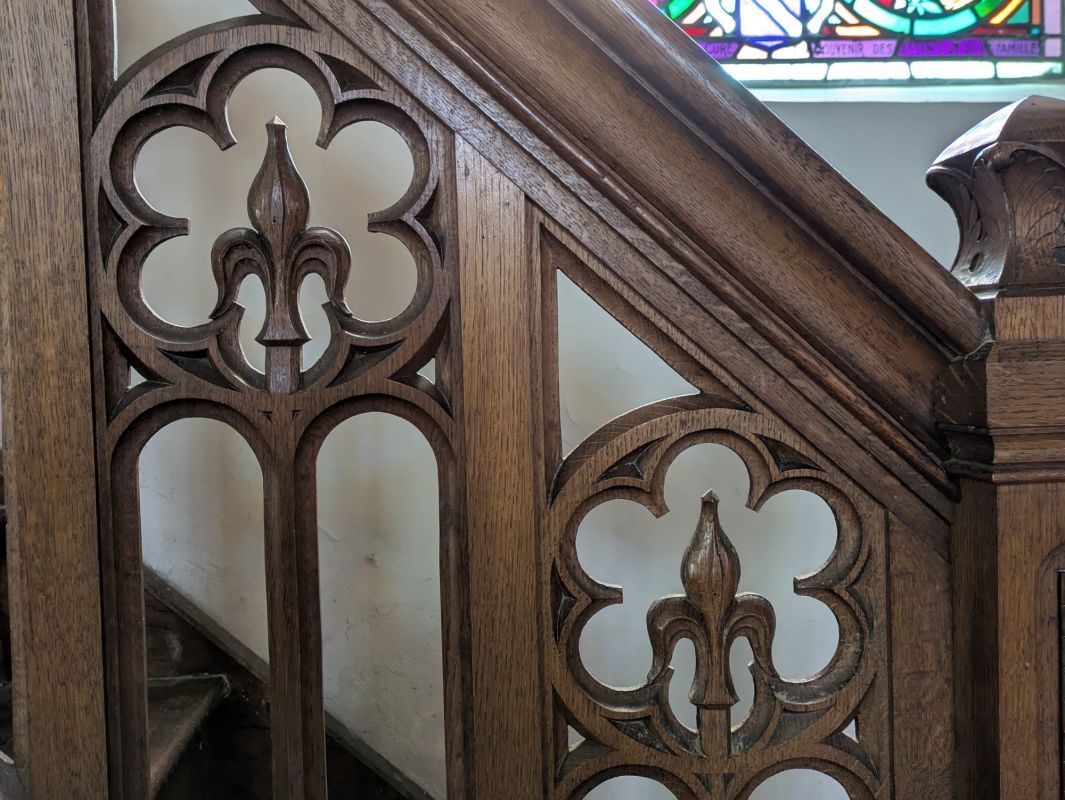
The church retains a harmonious set of wooden furnishings comprising pews, choir stalls and a pulpit. These elements, in the classical style, are distinguished by their delicate carvings featuring floral motifs. On the pulpit’s base, the four Evangelists are depicted with their symbols within a coat of arms.